
Precision & Prestige: A.I. Personalization in Luxury E-commerce
Despite the luxury fashion industry’s reverence for tradition and heritage, machine intelligence is reinventing luxury. In a recent study, Italian luxury consumers formed emotional bonds with A.I.-generated bags, mirroring traditional luxury brand attachment and symbolic loyalty, despite being informed that the designs were machine-made. One participant responded, “They were very beautiful in my opinion … [i]t is incredible that A.I. made them,” while another interviewee stated, “It’s that accessory that makes your outfit more valuable. Doesn’t matter who designed it” (Pantano et al., 2024). The study made it clear: Machine-generated marketing resonates with modern consumers. At the same time, revered houses of fashion such as Christian Louboutin are redesigning their digital storefronts to appeal to a new segment of luxury shoppers whose queries now begin with large language models (LLMs), such as ChatGPT, rather than search bars (Bain, 2025). A.I.-powered design, discovery, and interface strategy are reshaping the luxury market, and brands must evolve to stay relevant while preserving their distinct, upscale identities.
As modern consumers increasingly turn to chatbot-powered shopping instead of traditional search engine-based queries, luxury retailers have pivoted to view A.I. as an opportunity to earn a competitive advantage in the market. Slow adopters risk losing crucial market share as personalized A.I. agents manage customer journeys through styling, search, and checkout. According to a Business of Fashion report, shopping agents launched by big players like OpenAI and Perplexity can facilitate shopping tasks, navigate sites, place items into carts, and complete checkout (Bain, 2025). The integration of generative engine optimization, which is A.I.-powered web surfing, forces brands to rewrite e-commerce website codes because existing code inhibits A.I. agents (O’Brien, 2025). Pre-existing codes that online retailers still rely on restrict A.I. because its design treats any non-human interaction as a potential attacker, keeping out all bots by default to prevent fraud and analytics pollution (Cloudflare, n.d.). Modern A.I. shopping agents that human consumers utilize to search and shop appear exactly like these malicious bots, so brands require a complete overhaul of security-inforcing codes in order to permit “good” A.I. agents that can enhance revenues.
To remedy these unmet search engine optimization needs, Louboutin, Carolina Herrera, Farfetch, and LuisaViaRoma utilize startups such as Botify to reengineer interfaces around A.I. chatbots (Botify, 2024). Retailers have also launched virtual fitting tools and live recommendation engines, such as Ralph Lauren’s “Ask Ralph” (O’Brien 2025; Ralph Lauren, n.d.). A.I. is not trying to replace human sales associates; it is redefining aspirational luxury experiences in e-commerce by making websites feel more like helpful salespeople, explaining products, recommending options, and helping consumers decide what to buy at any time, location, and price point, even if they have never worked with a personal stylist or in-store advisor.
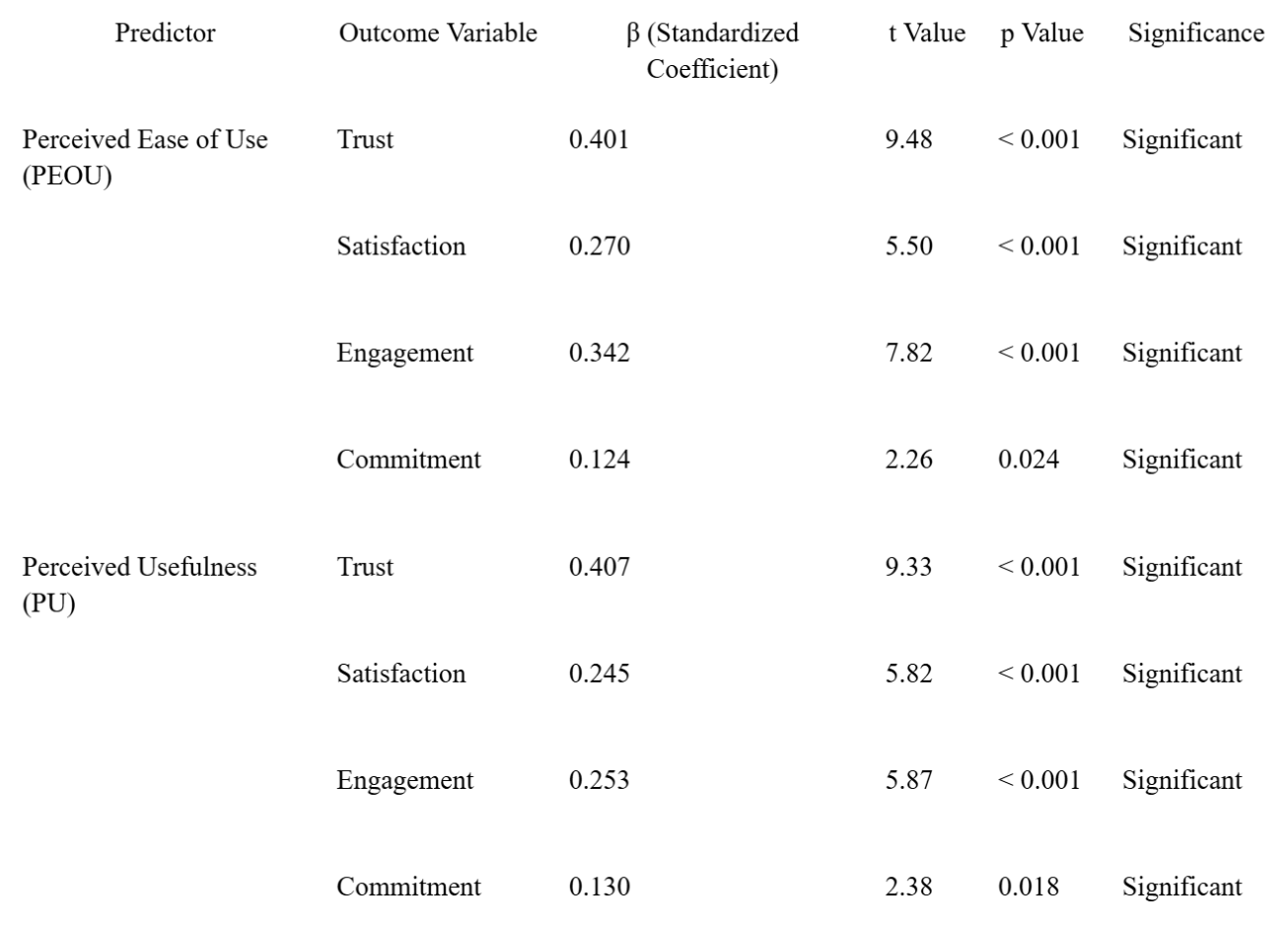
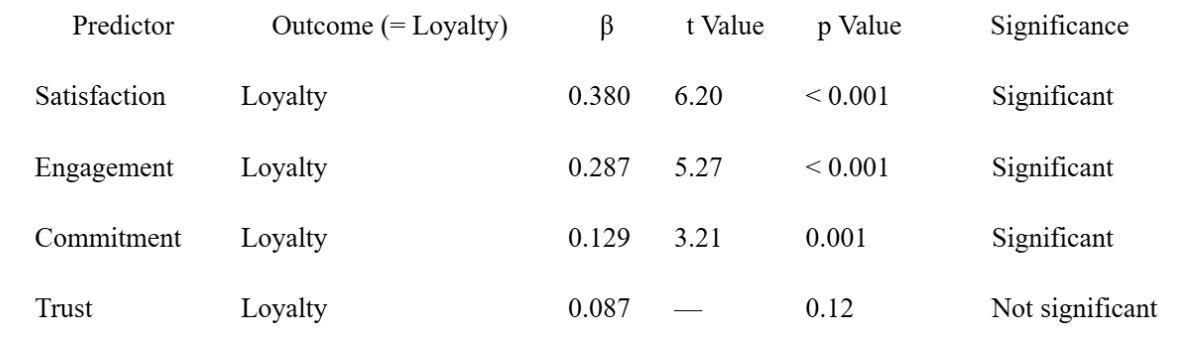
In the world of luxury, A.I. becomes a catalyst for enhanced consumer relationships, from bespoke attention to design cocreation and personalized recommendations. In a study of luxury buyers on Digikala, Iran’s largest e-commerce platform, researchers discovered that A.I. use in luxury fashion strengthened brand loyalty by enhancing the ease and usefulness of digital shopping tools aimed at improving engagement and satisfaction (Khamoushi Sahne & Kalantari, 2025). In the study, when A.I. shopping assistants were easy to use, people felt significantly more trusting, satisfied, and engaged with the luxury brand or retailer (fig. 1). Researchers also found that high consumer satisfaction led to increased feelings of brand loyalty (fig. 2). Successful shopping assistants personalized communication, tracked preferences, and predicted future behavior, creating powerful relationships and fostering the emotional attachment and recognition that reinforce exclusivity. This study is not alone in concluding that A.I. assistance strengthens customer resonance. According to Business of Fashion, A.I. shopping assistants can personalize customer-specific recommendations in real time, helping customers find desired items, increase conversion rates, and extend the lifetime value of each product (Bain, 2025).
Beyond personal shopping and associate work, A.I. can perform as a creative co-creator alongside designers and marketing teams without sacrificing traditional house codes and symbolic values. House codes are signature design habits that brands continuously return to in their patterns, materials, and shapes, while symbolic values are the feelings and ideologies brands aim to occupy in consumers’ minds (Pantano et al. 2024). Prompt-based A.I. also scales bespoke experiences from couture buyers to aspirational digital consumers. Together, the evidence shows A.I. as an impetus that facilitates online experiences and scales exclusivity while preserving craft, strengthening bonds that keep luxury clients coming back.
However, some luxury fashion houses worry that over-digitalization can cause brand dilution and a loss of exclusivity. In the e-commerce sphere, this phenomenon is called omni-fatigue — consumer exhaustion from omnichannel expansion, where brands market across all digital and physical channels (Delp, 2025). All-channel accessibility LLMs power could split luxury: brands that preserve an exclusive image and aura of rarity, and brands that lose their sense of exclusivity due to omnichannel oversaturation (Delp, 2025). These same A.I.-powered systems — along with brand-specific chatbots and predictive tool automation — risk detaching shoppers from the skilled artistry and in-person service they previously cited to justify high prices for luxury goods (O’Brien 2025).
Entering the latter half of the 2020s, the luxury industry’s challenge is to drive demand through strategically harnessing technology without diluting the aura and tradition that defines the centuries-old industry or replacing the human touch that converts window shoppers into lifelong clients. In other words, luxury should not position A.I. as a contradiction to craftsmanship and intimacy, but rather a monumental continuation. In the coming years, the luxury market will belong to the houses and retailers that teach machines to feel human.
Edited by Ethan Jacob
Appendix
Fig 1. Effects of Ease of Use and Usefulness on Customer Relationship Variables
Khamoushi Sahne, S. S., & Kalantari, H. (2025). Enhancing loyalty in luxury fashion with AI: The mediation role of customer relationships. Computers in Human Behavior, 156, 108331. https://doi.org/10.1108/APJBA-08-2024-0456
Fig 2. Effects of Relationship Variables on Loyalty
Khamoushi Sahne, S. S., & Kalantari, H. (2025). Enhancing loyalty in luxury fashion with AI: The mediation role of customer relationships. Computers in Human Behavior, 156, 108331. https://doi.org/10.1108/APJBA-08-2024-0456
References
Bain, M. (2025). AI shopping is here. Will retailers get left behind? The Business of Fashion. https://www.businessoffashion.com/articles/technology/ai-shopping-is-here-will-retailers-get-left-behind/
Botify. (2024). Discover how Botify customers are driving success.https://www.botify.com/customers
Cloudflare. (n.d.). How to manage good bots | Good bots vs. bad bots. Cloudflare. https://www.cloudflare.com/learning/bots/how-to-manage-good-bots/
Delp, B. (2025, October 25). The digital divide: How luxury learned being omni isn’t for everyone. Forbes. https://www.forbes.com/sites/briandelp/2025/10/25/the-digital-divide-how-luxury-learned-being-omni-isnt-for-everyone/
Khamoushi Sahne, S. S., & Kalantari, H. (2025). Enhancing loyalty in luxury fashion with AI: The mediation role of customer relationships. Computers in Human Behavior, 156, 108331. https://doi.org/10.1108/APJBA-08-2024-0456
O’Brien, A. (2025, July). How e-commerce sites need to change for the AI era. Vogue Business. https:// www.voguebusiness.com/story/technology/how-e-commerce-sites-need-to-change-for-the-ai-era/
Pantano, E., Serravalle, F., & Priporas, C. V. (2024). The form of AI-driven luxury: How generative AI (GAI) and large language models (LLMs) are transforming the creative process. Journal of Marketing Management. https://doi.org/10.1080/0267257X.2024.2436096
RalphLauren. (n.d.). Ask Ralph info.https://www.ralphlauren.com/askralphinfo
Ralph Lauren. (2025). Ask Ralph: Where style meets AI—a new era of conversational commerce [Video]. Microsoft Cloud Blog. https://www.microsoft.com/en-us/microsoft-cloud/blog/retail/2025/09/09/ask-ralph-where-style-meets-ai-a-new-era-of-conversational-commerce/